When you have your typical six-month cleaning, you probably have heard your dentist or hygienist call out different numbers during the appointment. Have you ever wondered what those numbers actually mean? Why do they call out so many different numbers while poking and prodding around your mouth? This blog will dive into what all those numbers mean and how they actually help your dental team.
Gum Disease Severity
Some of the numbers you may hear refer to your gum health. Dentists use a specialized tool to measure how much gum loss you may have experienced. When the gums are inflamed, they also pull away from your teeth and leave an open pocket. The size of the pocket is what dentists are measuring.
A 1 means gingivitis is present, which is a mild form of gum disease and is the most treatable. When the gums slightly pull away from the tooth, your dentist will call out a 1, meaning that you can still prevent more serious gum disease with proper techniques. Removal of plaque and regular checkups will typically resolve the problem.
If you hear the number 2, mild periodontitis is present. While similar to gingivitis, even mild periodontitis can cause bone loss. Losing bone around your jaw can cause long-term issues and major concerns for older patients.
When dentists call out a 3, that means periodontitis has progressed to a moderate stage. Deeper pockets have developed in your gums, and you could experience 20 to 50% bone loss around the tooth. Deeper pockets make it easier for bacteria and plaque to hide, leading to cavities and infections.
And finally, if you hear a 4, that is the most severe form of periodontitis or gum disease. Over 50% of your supporting jawbone is gone, and there are large pockets around your teeth. At this point, you will need surgical intervention to remedy some of the damage and hopefully prevent tooth loss.
Tooth Numbers
Each one of your teeth is also assigned a number, which makes it easier for an assistant or hygienist to make notes of problem areas while the dentist is looking directly at your teeth. Dentists will call out the affected tooth and the corresponding gum disease number if needed. It is much faster and easier to call out “3 on 15” rather than saying “a level 3 infection on the upper left molar.” The number assigned to each tooth is as follows:
Upper or maxillary (starting on the right side)
- 1- Third molar
- 2- Second molar
- 3- First molar
- 4- Second bicuspid
- 5- First bicuspid
- 6- Cuspid
- 7- Lateral incisor
- 8- Central incisor
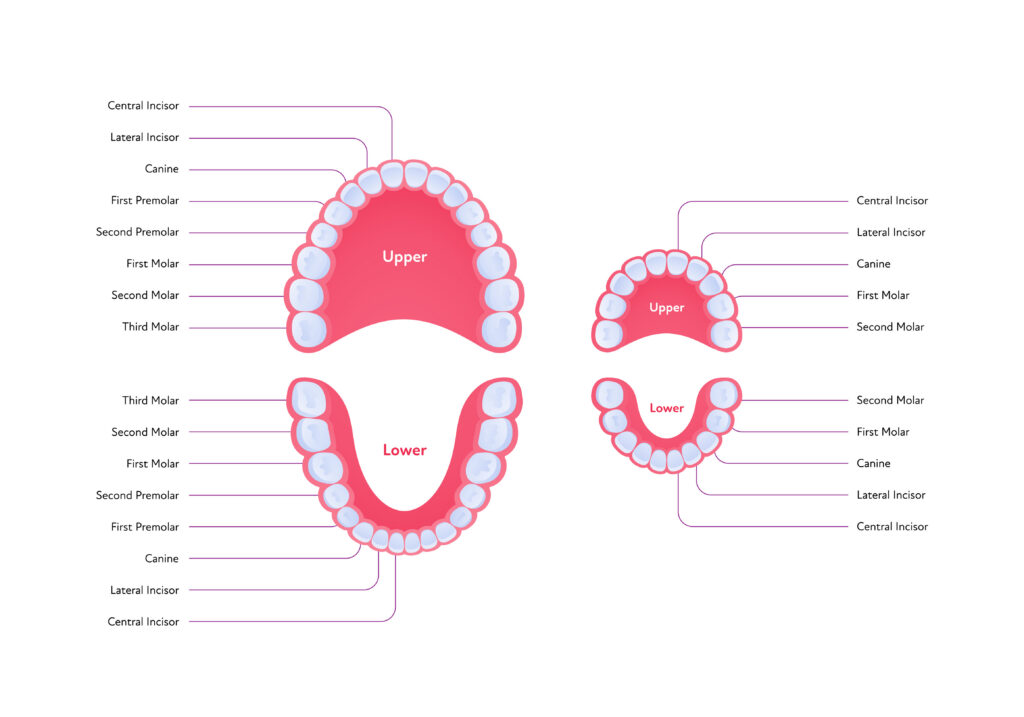
Then repeats from bottom up on the other side of the mouth for numbers 8-16.
Lower or mandibular (starting on the left side)
- 17- Third molar
- 18- Second molar
- 19- First molar
- 20- Second bicuspid
- 21- First bicuspid
- 22- Cuspid
- 23- Lateral incisor
- 24- Central incisor
Then repeats from the bottom of this list on up to the right side of the mouth for numbers 25-32.
How Dentists And Hygienists Actually Use Those Numbers
As previously mentioned, knowing these numbers and calling them out makes your appointment much shorter and makes less work for the dental team. These numbers also help a hygienist chart your teeth, as some patients may be missing teeth, not yet have their molars, or wisdom teeth. Numbering the teeth will help the dentist keep up on your dental progress and make sure that everything is accounted for.
While it may seem confusing to patients, dental professionals have been trained on these specific call numbers to make their job easier. Calling out these numbers in fast succession isn’t overwhelming for a skilled dentist or hygienist. If you want to learn more about charting and dental numbers, feel free to ask your dentist at your next appointment. They can help answer any questions and may be excited to talk about their training or their day-to-day operations.
Dental Cleanings From Avenues Dental
The team at Avenues Dental is committed to helping patients of all ages have healthy teeth and gums. We want you to love your smile, so we provide typical cleanings, restorative dentistry, and cosmetic dentistry services. For Salt Lake City residents and the surrounding areas, our dental team is the top choice if you want to have a healthier and longer-lasting smile.

Each patient is unique, meaning that they need unique treatment. We help you to reach your oral health goals through customizable treatment plans and consistent appointments. Avenues Dental is proud to work with many different types of patients to ensure that you have healthy gums, teeth, jawbone, and tongue. Schedule a consultation or your first appointment to get started today!
